My Freedom from Your Prayer

I had been planning to write a post on the work that women do, or rather the work we are expected to do. It was to be a commentary on the automatic default, the assumption that certain work is left to women. No discussion, just an assumption that she will do this or that. My desire to write such a post came out of quiet rage at seeing how women were immediately disadvantaged during the COVID-19 pandemic.

While businesses were lauded for “pivoting,” many of them did so on the shoulders of women who pivoted back into arcane roles of stay-at-home superwoman expected to be everything to everyone.

The foundation of my rage was solidified during the pandemic, but the evidence of default assumptions with regard to the work that women do could be seen long before COVID-19 hijacked our lives. It is a constant. The assumption that women will be the primary caregivers for their children and their elderly parents, the cooks, the housekeepers, the laundress, and the secretary, without much discussion or thought, supplies me with a sufficient source of resentment to fuel my rage for years.

As I unpacked the rage and sorted out my post, thinking about the origins of this flawed bias, I was derailed by an email from a senior manager in my company. It floored me and left me with new, although related, rage to unpack.

This senior manager had sent an email to all supervisors and leads in my department. The poorly written and meandering message was intended to motivate us to influence employees and correct a recent behavior trend. Glaring at me like a worm in the midst of this word salad was a phrase that left me nauseated: “I will be praying over all of you.”

I read it again just to be sure I read what I read. My brain was not playing tricks on me. In 2022, a senior manager at my company said, “I will be praying over all of you.” Not just “for you” but “over you.” I will address that disturbing preposition later in this post, and yes, it matters. I felt a rush of emotions, one toppling over the next. Confusion set in first, then indignation, followed by shame, and then fear. The shame caught me off guard.

I felt ashamed for being so offended at the thought of someone praying over me. I had been raised better. Having grown up in a strict religious environment, both at home and at school, I have solid justification for my shame and fear.

Growing up as a woman in the mainstream Christian church makes you acutely aware of your place in this world.

Although it’s been decades since I have been to church, the oppression I experienced during my formative years in the church still has the power to cast long shadows. Growing up as a woman in the mainstream Christian church makes you acutely aware of your place in this world. I knew that my place would never be to lead, but to follow. I would submit to the will of God, and one day, when I married, I would submit to my husband. I knew that my worth would only be tallied in the number of children I bore. I knew that I was never to question my father or the men in the church. To do so was to question the will of God.

My soul was never at home in the church. I felt like a foreigner. I knew from an early age that I wanted freedom and independence far more than I wanted the approval of my father or the church. My departure from the church was not a dramatic jail break. It was a slow recognition of hypocrisy, gaslighting, and corruption that would reveal itself over time. I grew more skeptical with each passing year until I was courageous enough to walk away from the darkness and into the warm light of my own independence.

One of the greatest frauds perpetuated by the church is its low expectations for women.

The road to my independence was filled with self-doubt and staggering lack of confidence. One of the greatest frauds perpetuated by the church is its low expectations for women. Beyond the expectation of marriage and children, there isn’t much else. I remember when I was accepted to a small liberal arts college on the West Coast, my father was disappointed. He felt that it was a waste of time and money (my money), and that college was only to serve the purpose of my own selfish fulfillment. He advised me instead to attend a local secretarial school. Looking back now, I see that fight to attend college as a pivotal moment in my life. I had won a battle for my autonomy in a war I didn’t know I was fighting.

My life has not been easy, but it is my own.

As I write this post, I am living an independent life. I am single, never married, and I own a home in a quaint and trendy neighborhood. I work in middle management, earning a comfortable salary, at a well-respected company. My life has not been easy, but it is my own. I have risen above the oppression of low expectations and escaped the prison of submission. Every bit of progress in my life has been my own private revolution.

As I unpack my visceral reaction, to what I am sure was intended to be a statement of comfort, I am once again reminded of my place. It is precarious. I am in management in a male-dominated industry in a red state steeped in toxic masculinity. My seat at the table, albeit meager, would not have been possible had a man not first pulled out the chair for me. My place is fragile. I envision myself and my independent life bouncing through the back yard in a soap bubble, aware that one tiny blade of grass could mean destruction.

I felt like Julia Roberts’ character in Sleeping with the Enemy after she sees the canned goods neatly sorted. Even I thought my reaction was overblown initially until I began to realize that not only was I fearing a loss of power, opportunity, and autonomy, but a loss of safety. My fear was primal.

Imagine if that senior manager knew the apocalyptic thought spiral I went down after reading his words. Would he feel shame? I think not. This brings me to his use of “over” and not “for.” “I will be praying over you.” To say you will pray “for” someone is to be thoughtful, supportive, to give a gift. It is an act of service to pray “for” someone. To pray “over” someone is authoritarian. I felt no comfort, only fear.

The recent Supreme Court decision, Kennedy v. Bremerton School District adds fuel to my fear. It seems innocent enough to allow a prayer in public institutions, and certainly private companies. We know; however, that isn’t about the prayer. It’s about the retaliation toward those of us who chose not to pray. When my senior manager grows more confident, no doubt bolstered by this latest Supreme Court decision, and wants to open our weekly meetings with a prayer, and I refuse to submit and bow my head, the retaliation may not be immediate, but it will come. That blade of grass just waiting to burst my bubble.

All major religions, at their most fundamental, threaten the autonomy of women.

While my fear stems from my experience in the Christian church, I am in no way discriminating against that specific religion. All major religions, at their most fundamental, threaten the autonomy of women. And in the bigger picture, the erosion of the line between church and state shifts us further away from a true democracy and into a theocracy. Theocracies are a bad idea, even if your god is on the throne. You don’t have to go back to the crusades to prove this point, just look at modern-day Iran, or the Taliban-ruled Afghanistan.

We should all be afraid. If you dream of a world where your daughters garner equal respect, opportunity, pay, autonomy, and a reasonable expectation of safety, learn to recognize and resist the seemingly innocent invasions of religion in the places they shouldn’t be.

If true equality is ever to be anything more than a dream, religion must stay in its box. Keep it in your church, in your home, and in your heart, but keep it out of my workplace. Your right to prayer should hold no more weight than my freedom from it.

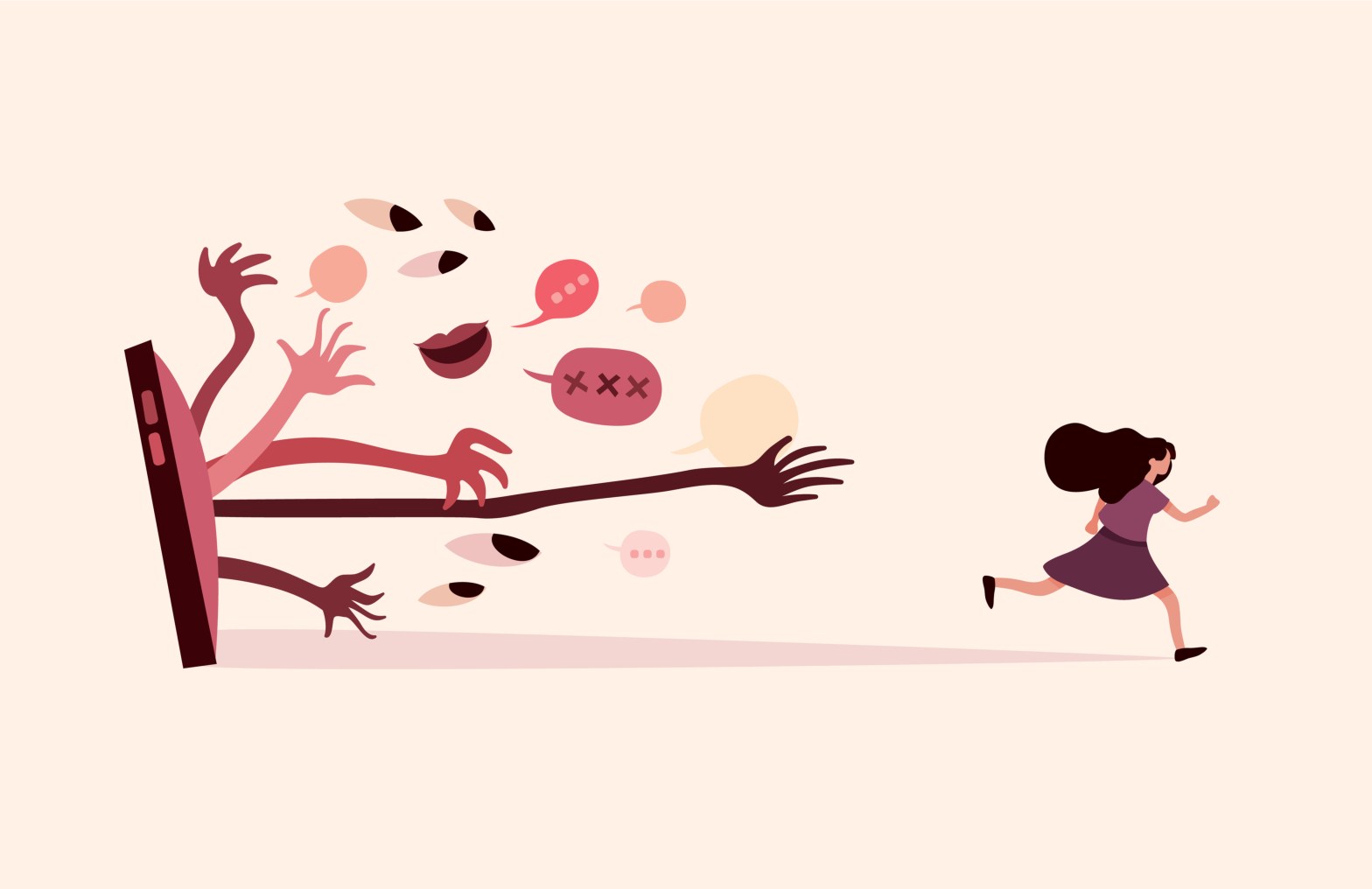
What Did You Expect?

I applaud companies who are making an earnest effort to hire and promote more women into leadership positions.  It’s a gentle golf clap in recognition of their recognition of the need to change.  Org charts that once looked like the membership at Augusta National now have a sprinkling of female faces.  And on some rare miraculous occasions, a woman of color even makes an appearance. 

What is keeping me from thunderous applause is my suspicion that much of this change is window dressing.  The charade gets exposed when women do not meet the expectations of the executive team or board of directors.  Often, they don’t really expect these women to lead.  They are ok with calling her the boss, but they are definitely not ok when she acts like the boss. 

What does it mean to act like the boss?  Most days it is a combination of setting priorities, motivating team members, removing obstacles, and communication, communication, communication.  Communication can include relaying information, setting clear direction, stating expectations, recognizing good performance and ideas, listening, and yes, the unfortunate chore of giving negative or constructive feedback to an employee to redirect their behavior and/or performance. 

They are ok with calling her the boss, but they are definitely not ok when she acts like the boss.

That last bit is tricky but essential if you are going to be an effective leader.  Effective leaders don’t ignore poor performance or bad behavior, they recognize it and deal with it because they know it won’t get better over time.  The longer poor performance or behavior is allowed to fester, the toxicity gets thicker and your high performers are dragged down and demotivated with resentment and frustration.  One bad apple definitely spoils the bunch. 

So, from time to time, we should all expect a female boss to redirect one of her employees.  It should be no different than what we would expect from a male boss.  This is not reality for me or most women I know in leadership positions.  For most of my career, it has been a feeling or a hunch that my redirection is received differently by men and also by women. 

My hunch was validated when I came upon on a study by Martin Abel of Middlebury College.  Mr. Abel is an Assistant Professor of Economics who devised a study to test how people felt about receiving criticism from both female and male supervisors.  As I suspected, participants in his study reported feeling a lower job satisfaction after receiving feedback from a female boss.  Women’s criticism = madder and sadder.   

Mr. Abel discovered that we associate women with giving praise rather than criticism. . https://urldefense.com/v3/__https:/theconversation.com/why-female-bosses-get-different-reactions-than-men-when-they-criticize-employees-145970__;!!CjzFQcbp3F2y!yyJjxH4fvaoU3h0FoY1sRN5cym7MyD7f0VW7xkpW4iwVwFA43Wg3My_7-BOgO_Fn0oy5NnkSE7Hk$

I want to know more, and I have a theory that I am certain someone else has already studied, and I’m bound to find it.  When I do, I will reference it in this post.  I suspect that the reason you feel madder and sadder when I redirect you vs. when my male counterparts do the same, is because you loosely associate women in leadership positions with your mother.  Think about it, your mother was most likely the first female leader in your life.  You went on to be led by Kindergarten teachers who were probably women as well.  The first, though, that was mommy.  She was your nurturer, your comforter, your safe haven.  (I realize not everyone had this experience with “mommy.”) 

…your mother was most likely the first female leader in your life.

If you grew up in an idyllic nuclear family with a mommy and a daddy, you may have gotten used to mommy the comforter and daddy the disciplinarian.  “Go to your room and wait until your father gets home,” is a phrase many of us have heard.  I suspect most of us feared our fathers far more than our mothers.  I know I did.  If you carry these expectations into today’s workplace you will be abruptly confronted with a contrasting reality. 

Let’s admit, none of us like to be redirected by our boss, male or female.  I think it smarts a little bit more when I do it because you feel betrayed.  You expected me to envelope you in a verbal hug, and instead you got “The job I asked you to do two weeks ago still isn’t done.  I need you to reprioritize and make sure it’s done today.”  Ouch!  Not only did you not get what you were expecting, you got the opposite.  I believe it is the letdown of your expectation in addition to the redirection that makes it more painful. 

If your male boss wants to talk to you about something, I bet you brace yourself for the worst.  Your expectations are already set so your reactions are either in line with your expectations, or maybe you even feel a sense of relief because “It wasn’t that bad.”  You didn’t get the verbal paddle. 

I believe it is the letdown of your expectation in addition to the redirection that makes it more painful.

Whether this theory holds merit or is just a bunch of garbage, the reality is, you are still holding me to a different standard than my male peers.  The solution suggested to me by some of my past supervisors is for ME to make some adjustments.  Soften.  Soften my voice, my face, and my words.  Apparently, it is up to me to make you feel more comfortable about a woman being your boss. 

I have worked for over 20 years in a male-dominated industry and company.  If you don’t speak clearly and directly, you will be eaten alive.  I learned how to be heard.  I cringe when I hear my female peers soften and stammer around on work calls or meetings.  They are accomplished, smart, experienced and hard-working women who should hold a wealth of confidence, yet they almost revert to a childlike tone and demeanor in their communication.  I do not fault them for this.  I understand.  They are adjusting to make you more comfortable.  Women are minimizing themselves so that you don’t feel threatened. 

I am not going to adjust, nor should any other female boss.  Employees need to make some adjustments, drop some expectations, and apply a consistent set of rules to men and women.  This doesn’t mean I have the right to be abusive.  I have seen some women overcorrect and become tyrants.  And yes, I would say they were tyrants if they were men as well.  Some behaviors are unacceptable regardless if you are a man or a woman.  “Men do it all the time” does not justify abusive behavior.

Women are minimizing themselves so that you don’t feel threatened.

I do; however, have the right to speak in declarative sentences, direct your work, set clear expectations, and hold you accountable for your performance and behavior.  I am your boss, that is what bosses do. 

I recently received some redirection of my own from my male supervisor who informed me that someone complained to him about the way I communicated at a meeting.  I asked him “If Tim (one of my male peers) had said the same thing, would anyone have been offended?”  To his credit, he paused and said, “I don’t think it would have been an issue.”

Do whatever you need to do to be ok with “her” being your boss and acting like your boss.  Close your eyes and imagine a man said it.  Engage in self-reflection.  Get some training.  Do whatever you need to do, because daddy isn’t coming home.  Mommy has to do this all by herself. 

Love Among the Cubicles

You’ll swear on a stack of Maxims that she’s the one. 

We both know she’s not. She is just another one.  It amazes me that some men still see their workplace as a convenient hunting ground for their next conquest.  They enter the office like a deer hunter creeping into a meadow, rifle cocked and ready, just waiting for an unsuspecting doe to stumble onto their path, oblivious of her impending doom.  In the post #metoo era, didn’t you learn anything?  Why are men still pursuing the women they work with?   

You may think of sexual harassment as the classic “quid pro quo” or unwelcomed physical touching and yes, if you engage in that behavior, you will most certainly lose your job.  But it’s not just the obvious and egregious forms of predatory behavior that can negatively impact your career.  Simply asking a female coworker out on a date can be risky.

If she says “yes” and you do go out on a date, then what?  Maybe the date goes perfectly, and you are now in an office romance. While consensual, it is still fraught with peril.  When it’s good, it’s really good, but when it’s over, it’s awful.  Excruciatingly awkward -for you AND her.  And if the date goes bad, that’s a whole different level of awkward.  Depending upon the infractions committed (yes, it will always be your fault -real or imagined), she’s going to tell everyone about her disasterous date with you.  Congratulations.  Now you’ve been labeled.

“Cheapskate” – “Oh my god, we just went to coffee, he ordered his own drink and paid for it, and I was on my own.  Like, you can’t buy me a coffee?”   “Narcissist” – “He brought a photo album of himself!  No, I’m not kidding.”  “Creep” – “He wanted to know where I lived.  He kept telling me I smelled pretty.”  Of all the labels you can get at the office, “Creep” is by far the worst.  It is the stain that never washes off.  Once you own that label, it owns you.  Women will be hesitant to work with you, or for you.  You are the office pariah.

Of all the labels you can get at the office, “Creep” is by far the worst. It is the stain that never washes off.

This is if she says “yes.”  What if she says “no”? How will that feel?  Assuming you take the first “no” as the final answer, you will always be the rejected one.  Passing her in the hallway, deep down you are confronted with the reality that she does not want you.  You are not good enough.  We have all felt the sting of rejection; why go through that at work?  Wouldn’t it be better to work in the hopeful unknown than the soul-crushing reality of rejection? 

If you fail to take the first “no” as the final answer, and you continue to ask her out, you are guilty of harassment.  Whether in a legal courtroom or the court of public opinion, incessantly pestering a woman to go out with you is disgraceful.  And don’t think that changing the activity, will change her mind.  It’s not that she doesn’t want to go ice fishing, she doesn’t want to go ice fishing with YOU.  It’s not the event, it’s most definitely you.

When I was just starting out in my career, I had moved to a new city and knew very few people. I was an introvert and kept to myself.  I kept my head down and tried to work hard and make a good impression.  I wanted to be taken seriously and build a solid professional foundation.  It was in this first year of my professional career that I was hunted by a man we’ll call “Jim” since that was his name.  Although Jim worked on a different floor and in a different department, my job duties sometimes required me to interface with people on his floor.  Jim was a little older than me but still closer to me in age than most of the men in the office.  I think he somehow thought this opened a window for him.  “You’re single, I’m single, we’re young.” 

The first time Jim asked me out, I came up with a quick and clever excuse.  “I’m super busy this weekend, still unpacking.”  And yes, maybe I should have been more direct and told him I wasn’t interested or didn’t want to date anyone in the workplace.  I was too young to be that brave, and yet I somehow knew enough about the fragility of the male ego to fib. I chose to be kind and gentle.  If I had the chance to go back and do it again, I just might do the same.  I have learned that when some men get their feelings hurt, they will make your life a living hell.  It’s best to keep them in the hopeful unknown until you’re out of reach. The truth is, I shouldn’t have been put in that position in the first place. 

Jim continued to ask me out over the next year.  He came up with all sorts of new activities:  hiking, skiing, movies, dinner, BBQ, and the museum.  Each time, I had to be quick and clever in my excuse.  It was stressful.  If I had to go to his floor -to do my job-I would find different routes that would help me avoid his office.  I avoided communal areas, and even looked out the window to see where his car was parked so I could wait until he left before I ventured out.  When I saw him, I panicked.  I literally broke out in a cold sweat, and my heart would race.  I was like a frightened rabbit in the crosshairs. The last time Jim asked me out, I came up with yet another “quick and clever.”  When I got back to my desk, there was an email from him stating that “this was the last time he was going to ask me out.”  He was mad at me and now I was being punished.  I burst out laughing in relief and disbelief.

When I saw him, I panicked… I was like a frightened rabbit in the crosshairs.

When I look back at my younger self, as most of us do, I am both embarrassed and angry.  Embarrassed by the lack of courage to just say what I really wanted to say, and angry that I had to endure that.  Instead of dedicating most of my cognitive effort to thriving in my early career, taking in knowledge and earning my wisdom, I was playing hide and seek like a frightened animal.  Instead of being focused on the task at hand, avoiding Jim became my task at hand.  I shouldn’t have had to plot evasive maneuvers or craft “quick and clevers” to soften the blow.  How dare he. 

Women at every level in their career don’t need or want that distraction.  And most importantly, they don’t deserve it.  I didn’t come to work this morning so you could hit on me.  I came to do my job, build my career, and pay the rent.  I’m not here for your entertainment. 

This isn’t an episode of The Office and she’s not going to be the “Pam” to your “Jim.” That was fantasy and this is real life. In real life, there are now over 1,500 dating Apps for you to choose from.   Choose one and bask in the hopeful unknown until someone swipes right.

The Copout Compliment

Good girl!

“I can’t believe he said that.” I sat staring back at the Skype message.  I could feel my cheeks getting hot and the tears welling up in my eyes.  I shouldn’t have been surprised.  I hear it all the time from men.  I can see them getting ready to say it, internally I cringe, and of course, externally I force a smile and an “oh, thanks” with my head cocked slightly to the side in the most non-threatening posture I can command. 

This one hurt more than others.  It came from a male colleague I deeply respected.  We had recently worked on a project together and there was opportunity for him to see me, to really see me work.  I reached out to him because I knew he was retiring, and I didn’t want him to leave without knowing how grateful I was for the time and wisdom he shared with me. 

I half expected him to give me parting words of wisdom, or a word of encouragement.  What I got instead was the most common and infuriating pat on the head, the copout “compliment” men love to give me, and I suspect, millions of other women.  “I’ve always admired your energy.”  Humiliating.

So what?  Millions of women across the globe are, at this very moment, being sexually harassed, mistreated, and seriously abused.  So, what’s my problem?  I get emotionally bruised by a compliment?  I should graciously accept, what was from his point of view, a genuine word of praise.

I have had this argument with myself for years.  Every time I hear this “compliment” it feels like someone punched me in the gut.  It confirms my long-held suspicions that I am not seen as an accomplished professional but rather some little girl with pigtails, spastically bouncing off the walls.  

When I say I’ve heard this “energy” compliment a lot, I would say I’ve heard it routinely over the past 20 years from men I worked with who were peers, subordinates, and managers.  I’ve built a career and a reputation as a problem solver, someone who can get things done when others have tried and failed. 

My list of products, projects, and programs is prolific.  You can’t walk through the halls of my corporate office without seeing something I’ve had a hand in delivering with a team or on my own. 

I’m sure it’s easy to look at my resume and assume I built it with an abundant amount of energy.  No doubt I bound out of bed each day, buzzing with excitement and positivity. No.  I am tired.  I am 25 years into my career and I have very little raw energy left to throw at any project. 

I am tired of fighting to be paid as much as my male peers who don’t have a fraction of my resume.  I am tired of having to prove myself over and over and over again, just to get the title for the job I’m already doing.  I am tired of being passed over for men who get opportunity after opportunity based on solely on “potential.”  If they have any substantive accomplishments on their resume, it was long ago, and yet they’ve been able to draw on that political capital for decades, while coasting on mediocrity.  It has worn me down. 

Once upon a time I was able to emotionally self-rescue, but that superpower is dwindling with each passing year.  So, no, I don’t have any energy, at least no more than anyone else.

Not only is the “compliment” inaccurate, it’s offensive.  Think about it.  That’s the only thing you can find to say to me?  “I like your energy.”  I’m not a terrier.

It’s not energy; I don’t have any more than you do.  If you were paying attention at all you would see that I am able to communicate with just about anyone in any forum.  I build and inspire diverse teams.  I am organized and keep detailed schedules, logistical plans and budgets in check.  I know what done should look like, and I have enough grit to get to “done” regardless of the obstacles.  Those are my talents.  For years now, I have been measuring out and pouring in the right amount of each to create a lethal recipe of efficiency. 

In your mind you might be saying to yourself, “she sounds quite full of herself.”  And you would be right.  I know who I am and what I’m capable of.  If you assigned those talents to a man, would it sit better and feel more comfortable?  Maybe all I get is “energy” because acknowledging the existence of these talents in me, a woman, puts me on equal footing with you.  Now you’re really uncomfortable.  Now you are confronted with the possibility that not only can I do the same job as you, I may actually do it better.  And maybe I’m better at leveraging the talents traditionally reserved for men.  It’s possible I’ve figured out the ancient art of, you know, L-E-A-D-E-R-S-H-I-P!  So, if you’re having trouble finding the specific words to give me a real compliment, you can always rely on one that’s tried and true, the one men love to give each other.  Say it with me, “I really appreciated your leadership on that project.” 

I don’t have a secret battery pack I plug into to recharge.  I am talented, but I am tired.  I’ve been tired for most of my career.  I have to produce at a dizzying rate, not to guarantee advancement, but just to maintain employment.  The prospect of working long after my male colleagues have retired, to make up for the salary deficit I’ve been dragging around for decades, just adds to my exhaustion.

To cite “energy” or “fire” or “spunk” as the justification for a woman’s success gives men an easy out and further dehumanizes us.  The more men can separate and redefine our talents as somehow different than theirs, the more they can paint our success as some type of anomaly.  My success is different and surprising, a fluke, an inexplicable oddity. 

Different leads to unequal and less than.  I get “different” opportunities, and I am only allowed to be successful in specific arenas, not the same as men even though I play the same game and often play it better.  I don’t want a special arena; I just want the same one you have.  Are you afraid to let me in?

The next time you want to compliment a woman in your professional life, please don’t tell her you like her energy.  The women at your company don’t have any special energy reserve.  Chances are they have far less energy than you do.  If she’s young and single, she’s broke and probably working two jobs.  If she’s a wife and a mother, she’s exhausted from having to care for everyone but herself.  If she’s a woman of color, she ran out of energy long ago from having to bob and weave her way through an obstacle course you can’t imagine.  They’re all tired, so don’t pat them on the head with the copout compliment.  Just tell the truth.  Have enough courage and confidence to acknowledge that she has the same talents as you, and sometimes she wields them better. 

You’ve Come a Long Way, Baby

Photo by Jessie Crettenden on Pexels.com

Virginia Slims superficial nod to women’s liberation in the late 1960s may have been well-intentioned, but it was also naïve and dead wrong. This statement, as a sentiment, is as infuriating as it is trite.

The idea that women have been on some journey to prove their own competency is maddening! As if we have been stumbling around for centuries hoping to bump into our own intelligence and finally prove our worth.

There is no journey through the centuries. We have been aware of our own worth for some time. We have been right in front of you all along, so obvious, like the glasses you’re looking for that are perched on the edge of your nose. We have been here waiting; standing here with grit and compassion, wisdom and ingenuity. We have led, we have followed, we have fought, and we have bled.

We have been aware of our own worth for some time.

The journey is not ours, it’s yours. You, our male colleagues, our bosses, our husbands, and brothers and fathers. You are the ones on the journey to discover what we women have known all along. And while you’ve come a long way, you still have a long way to go.

This site is dedicated to helping you understand the obstacles that still remain for women and how you can help to remove them for the benefit of your business, your friends, and most importantly, for your daughter.

Consider me your guide on this long and winding road. I am uniquely qualified as a women who is surrounded by men in the state in which I live, and the industry that employs me. This site is for the men, the good men who are allies, who want to be supportive, but may not know how, and may be blindly creating pitfalls for women, at the detriment to their own success.

This is a safe place to gather insights, increase your awareness of your own biases, and to make changes in your world that can change the world.